The BTCC announced last week that the championship will be accessible to international fans via the BTCC YouTube channel this season, with qualifying being available to watch live along with the raceday coverage of the three BTCC races and the support categories.
The move is a positive step forward for a championship which over the last few seasons has not been available worldwide on a live basis. Apart from major international championships, broadcast rights no longer seem to have any intrinsic fiscal value away from national or regional markets, which has led to a number of competitions ditching the idea of international TV broadcast in favour of free streaming away from their ‘home market. The US based IMSA Sportscar series and a number of SRO properties (including British GT) have found growth away from their core markets with a free online offering, the BTCC will now join those championships in allowing ‘out of market’ race fans the chance to view the series as it happens.
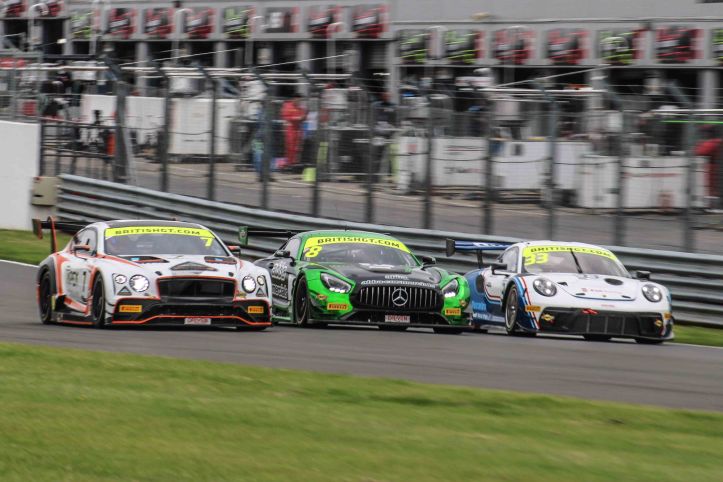
British and American fans will not be able to legally access the YouTube coverage. ITV will retain the UK rights for online broadcast in this country via the ITVX app in support of their continued coverage on terrestrial TV. In the USA the BTCC has been available delayed on MAVTV. That network was recently taken over by the US based RACER Media and Marketing group (publisher of RACER magazine) with company president CJ Olivares telling Forbes that in terms of live coverage on the channel they are “pursuing a number of new race properties both for the 2025 season and beyond,” which suggests that the company could be interested in a more comprehensive coverage of BTCC, over the delayed (sometimes by months) package it has delivered in the recent past.
There are a number of reasons why this worldwide shift is a good move for the championship in terms of worth and expansion, but there is also discussion about whether it could signal a move to online only in the future for the BTCC.
Naturally, details of the mechanics of the contractual situation involving ITV providing coverage of the series are not available. There is no indication as to whether the live coverage (which according to the BTCC statement will be through the BTCC YouTube Channel – rather than through the ITV Sport YouTube channel – which has delivered qualifying to UK viewers) will be monetised by the BTCC or by ITV. The current TV deal with the network runs until the end of the 2026 season.
The announcement has led to rumouring about the future of BTCC broadcasting beyond 2026. Is there a possibility of online streaming replacing terrestrial broadcast in the United Kingdom? Could the future of the BTCC be solely stream based with television binned off? That seems unlikely.
According to the latest information available via BTCC and teams’ commercial prospectus offerings for 2024 and 2025, television is still a strong draw in terms of demographic reach and viewing figures. According to teams and drivers in both the BTCC, and support categories, TV coverage is still a vitally important component when attracting sponsors who move into the sport for advertising, rather than B2B opportunities.
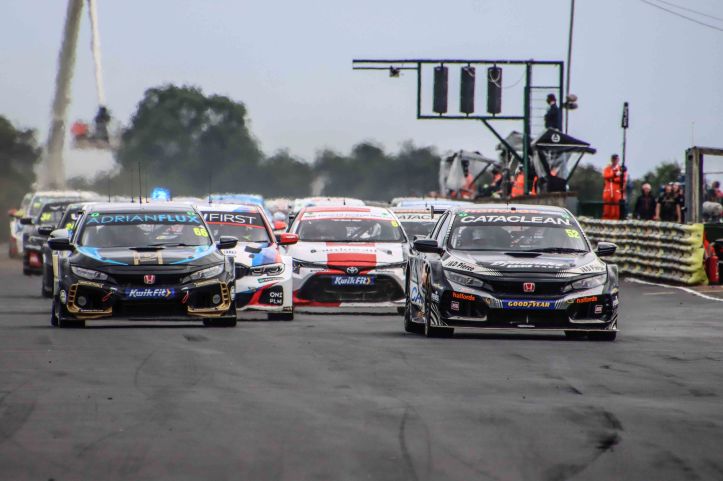
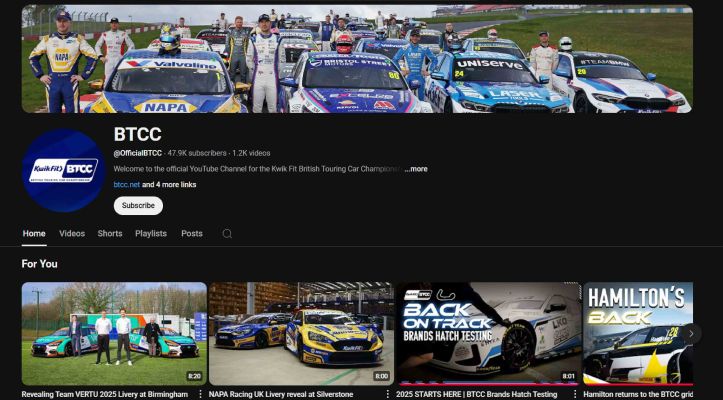
The BTCC dabbled in Tik Tok coverage of races last season. No announcement has been made in regard to that continuing, with the championship on the platform currently sitting at 27,000 followers, which is 20,000 lower than the current BTCC YouTube subscriber count. UK numbers for Qualifying on the ITV Sport YouTube channel was around 45,000 viewers per session last term, showing that there is a big enough die hard fanbase who want to see Qualifying as it happens, but the TV numbers are another statistic altogether.
The released PR brochures have TV figures to help draw the attention of potential partners. Some drivers and teams are happy to breakdown what they work by, but whichever way you cut the cake the BTCC is still attracting a decent TV audience in the Sunday afternoon timeslot. The 2024 BTCC brochure claims a TV audience of 14.8 million over the 2023 season, the prospectus for 2025 from Excelr8 quotes 17.4 million UK TV views, but those totals are cumulative of the live broadcast, plus highlights – including catchup and streaming via ITVX.
One team told Touring Car Magazine that the live BTCC races usually attract 300,000 to 350,000 viewers – according to figures they use – which would account for between 9 and 10.5 million live viewers across the season, with the rest of that 17.4 million coming from later coverage (with a significant drop off for the support categories.) These are not Formula One style figures, but to have over 300,000 on a Sunday afternoon outside of the five main terrestrial FTA channels is a positive market share. There is still space for growth, as shown by an ITV1 slot for the opening race at Oulton Park in 2023 which reached a wider audience yet again, showing that the BTCC will need TV coverage in the coming years to continue to attract UK based sponsors to a major share of the viewership.
However, there is a case to be argued for the benefits of international coverage, and the possibility of eventually branching out for bigger commercial deals. While the types of car eligible to race in Tin Top competition is shrinking, the type of racing it offers is still desired. While many fans mourn the loss of massive factory involvement that we have seen in years past, having minimal dependence on manufacturers has likely saved the BTCC. Looking further afield we have seen the factories ditch DTM, forcing it to switch to GT3 machinery. The World Touring Car Championship and WTCR has declined, with the current ‘World Tour’ format needing local championships to support its endeavours. Supercars in Australia still draws an international crowd, but what cars come next after local car production has disappeared? The rough and tumble of proper Touring Car racing has shrunk globally, and the BTCC is primed for here and now around the world.
Formula One has grown interest in motor racing globally, and many championships have tried to ride the coattails of that by copying the media format laid out by the successful ‘Drive to Survive’ Netflix series. NASCAR and Moto GP both tried, and failed, to mimic that on an international scale, and the major failing for that is inaccessibility to the product itself, with many international deals putting those championships behind separate paywalls to the services that carry the shows. A key to growth for all championships below F1 is to allow access for a younger generation, and to cultivate an accessible attachment that will grow into long term fandom. The BTCC with its short sharp races is built for the new motor racing fan, and some of the 2025 grid, and support package, should be used as a selling point in that arena, and that phrase ‘selling point’ is crucial.
Just putting the racing on YouTube is not enough. It has to be promoted, and that promotion needs personality, which the BTCC has plenty of on the grid. The sharp and impish Tom Ingram and down-to-earth Dan Lloyd and current champion Jake Hill are ahead of the game. Their post-race weekend vlogs and films with unfettered access can be a huge bonus if allowed to thrive, as it will allow the international audience to contextualise the sport in the present. This kind of content needs to be built upon. With drivers like West Country boy Max Hall coming in with an underdog cheery engaging character, and the returning of a media savvy triple champ in Gordon Shedden – the championship has all of the variety needed to boost itself and build towards being the hottest motor racing series globally on YouTube, but it’s not just the BTCC that will benefit.
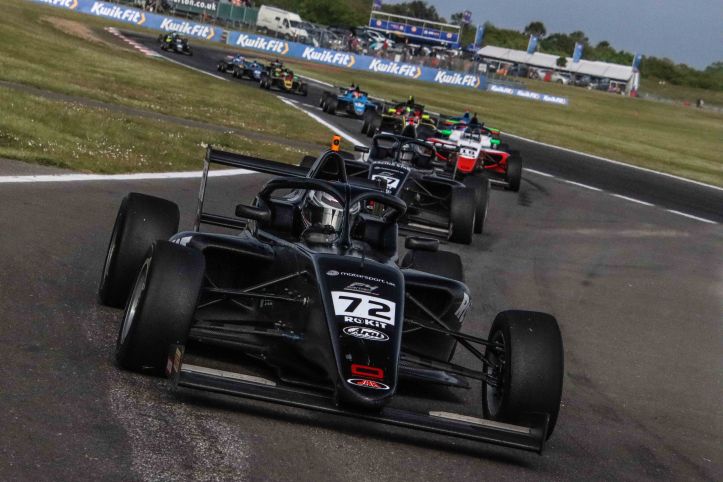
Another sidebar in the success of Formula One since its acquisition by Liberty Media has been the surge in interest in single seater racing. While IndyCar has begun a march back to the mainstream in the USA, with the inclusion of F1 fan favourite Will Buxton, the series is also continuing in its international growth – and much of that is credited as being thanks to the F1 boom. Formula Two and Formula Three have grown in importance among younger and newer fans, and so has the sphere of Formula 4 as the world hunts for the next big thing in F1. British F4 has delivered that already with Lando Norris, Oscar Piastri and Jack Doohan (and Colton Herta in IndyCar.) Allowing the British F4 series to have some of its calendar streamed live around the world will certainly be of help to the F1 hopefuls who line up at the majority of BTCC rounds in the entry level single seater championship.
The UK has been reduced to a single seater backwater over the last 15-20 years after being the proving ground for future F1 drivers. This is a chance for that championship to raise its profile to begin to match its European based rivals. The same can be said of the Porsche championships on the support bill. The UK Carrera Cup series has always been healthy, and although it has provided starting points for drivers to go GT racing and further, it is still seen as being lower on the rung than some other European or regional Carrera championships. Again, it will be easier for drivers stepping into that arena to showcase their stories internationally, and the bare fact below that is that expanded numbers watching should benefit drivers across the board. Those who compete in Mini or Porsche Sprint Cup racing, or even the TOCA Junior series, if it finally appears next year, will be able to go forward to potential partners and add international numbers and exposure to their proposals.
As for livestreaming in the future for the BTCC itself, at some point it will become the predominant format for consuming the live action – that is the snowball tumbling down the mountain, but right now, or even in the next three or four years it is hard to imagine that TOCA will have the reserves to deliver the quality of broadcast that ITV currently provides, and to turn its back on TV in the future would depend upon building a strong foundation via YouTube over a number of years to prove the concept well before considering moving in that direction in the UK.
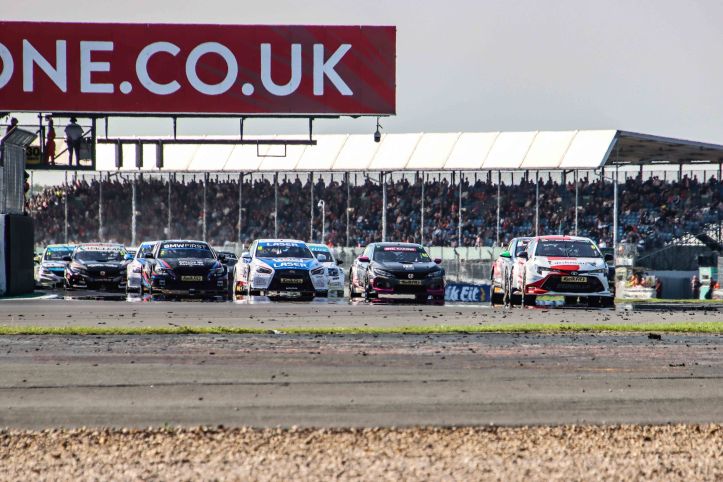
It has been 28 years since the TOCA run BTCC was given its first BBC Grandstand live TV slot. At the height of the Super Touring era the national programme – which was the leading sports TV programme in the UK – that had kept sports fans informed and entertained was broadcast every Saturday afternoon, and up to the end of 1997 was also aired live during the summer months on a Sunday (before becoming a permanent fixture.)
The Corporation had been the go-to place for motor racing fans for decades as the Beeb had covered Formula One exclusively live for the previous two decades (with its first live F1 coverage being the 1953 British Grand Prix) and in addition Grandstand had covered a myriad of other categories from delayed Indy 500 coverage to live grassroots club racing. By far their biggest success outside of F1 as far as circuit racing goes had been the BTCC.
There is a very different media ecosystem today. Never mind the Indy 500 highlights, the full IndyCar season is covered across the season (as has been in the UK for over 30 years) but now it is with practice and qualifying on satellite TV. Almost every club meeting seems to pop up with a livestream on YouTube. Immediate access around the world is at there at a swipe whether on a TV or phone screen. If you want to watch some TCR UK live in Guam, or Britcar as it happens in Indonesia, or even a 750 Motor Club meeting in Lesotho? That’s no problem, YouTube is the place to go.
The announcement brings the BTCC into the 2020s. It is a mirror of the American endurance series run by IMSA, which has seen a growth in popularity internationally after switching from free international visual coverage on its website to free coverage outside of its home market on YouTube. At a time when its main international rival – the WEC – is continuing to struggle with an unreliable paywall app, and its TV coverage is falling behind increasingly smaller TV lockouts (TNT Sports in the UK,) the IMSA experience is seeing live coverage of its own headline, and even support races, grow way beyond their national interests as a broadcast spectacle. To make it work they add value with behind the scenes videos and push the category among socials – with co-operation from the teams and other forms of media. The cross-cultivation over and above just sticking it on YouTube and saying ‘there you go’ is paying back.
During the BTCC heyday of the nineties the voice of F1 – Murray Walker – had also been the voice of the carefully crafted British Touring Car highlights package that aired a week after each round of the championship, and it became an integral part of the growth of the series in not just attracting fans, but also the manufacturers and their ever-increasing racing budgets.
As pointed to earlier, the BBC had lost the rights to Formula One to ITV for the 1997 season, and the next best thing to keep petrolheads tuned to the channel was to offer them some alternative top line live motor racing coverage, which at the time was the BTCC. Often remembered as an ‘international’ championship taking place in a single country, not only was there a gradual shift from highlights to increasing live coverage, but also to head the myriad of Super Touring Championships around the world in terms of TV coverage on channels like the(recently pulled from the UK) Eurosport channels. Such was the appeal of the UK national series that it enabled the top stars of the day to effectively headline the Bathurst 1000 race for that year, as the format replaced the local V8 leviathans for the event.
That May 18th 1997 live TV debut for the modern BTCC on BBC Television was the start of something that is now taken for granted – live terrestrial TV coverage. While the BTCC might have been popular, the idea of permanent live broadcasting for the championship was deemed as slightly absurd at the time – after all, it wasn’t going to be allowed to clash with athletics, swimming or cricket week after week, but over the following years more and more races were covered as they happened, with ITV grabbing coverage in 2002 and taking full live coverage of all three race day competitions in 2008 (live coverage had also aired on satellite TV at the time.) That format for broadcast has remained static ever since and, as pointed to earlier, the current ITV contract runs until the end of 2026.
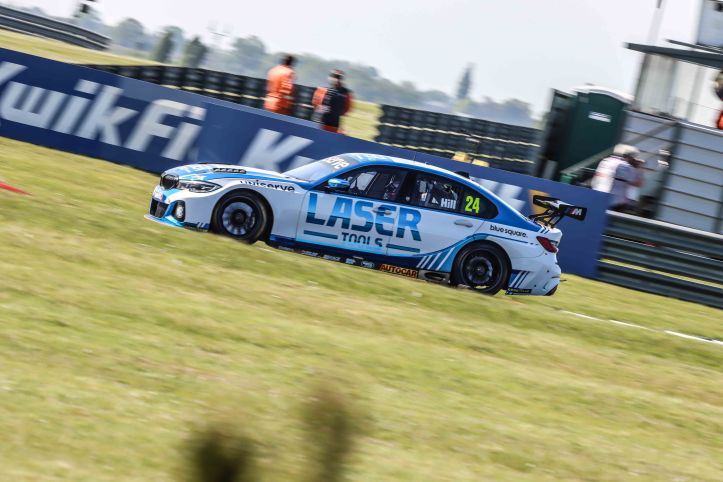
Over the last couple of decades international coverage hasn’t been a huge aim for the BTCC. Post-Super Touring the BTCC was reduced to a provincial championship as NASCAR became the international staple for Saloon/Sedan racing. For the BTCC and its entries, major international markets were not a target as more and more commercial partnerships that teams and drivers formed were of a domestic nature. Many of the names plastered across front running cars did not mean a jot outside of the UK, and those footing the bills, for the most part, would not see any commercial benefit.
The globalisation of motor racing has seen international, national and regional motorsport championships grow their fanbases thanks to free streaming. Sportscar Racing has seen a huge growth with events such as the Spa and Nürburgring 24-hour races, the ELMS and others joining the IMSA Daytona 24 and Sebring 12 hour races in offering their wares to fans around the world, pulling in respectable numbers. Events such as the Creventic endurance races continue to see viewership grow, with the recent Mugello 12 hours topping 100,000 viewers, and even last weekend the British GT championship at Donington – region unblocked on YouTube – received over 100,000 views.
Last season the BTCC went down the Tik Tok route, partially to attract younger fans – which is a must for all forms of motor racing outside of Formula One – but there is a buzz returning for the championship. It doesn’t take long to hunt around YouTube to find a couple of channels that have illegally uploaded full BTCC races for an international audience, with some videos reaching 60,000+ views. Online chatter points to international fans who still remember the glory days of the nineties, and lamnet missing out on the current coverage.
The championship is ready for this opportunity. While many other forms of racing stream to YouTube live, not many of them match the visual intensity of BTCC coverage. The polished images from ITV married to packed trackside attendances – at most events – with moments that cause debate, as opposed to some national and international championships that race on circuits with no spectators and feature five small cameras and a couple of fixed position ones, should be appealing to those around the world looking for a proper high quality motor racing TV fix.
Added together this information shows that the international appetite for the BTCC will grow, which points towards the decision to allow the BTCC to spread its name across the globe as one that is salient, and even if the BTCC itself does not realise it, there is the possibility here to curate an international fanbase that will allow the series, and its support package, to become THE go to place in livestreamed motorsport.
 Touring Car Magazine