
Formula One has become the domain of the young. Of the 2025 rookies Gabriel Bortoletto and Isack Hadjar are 20 years old, Ollie Bearman is 19 and Kimi Antonelli is 18. Of the current set of front runners Max Verstappen made his debut at 17, Lando Norris and Yuji Tsunoda at 19. The days of drivers starting their F1 career in their mid-20s and going on to be successful are over. Kids are showing they can handle an F1 car at incredible young ages in modern times.
Nigel Mansell (27) Ayrton Senna (24) Alain Prost (25) and even Michael Schumacher, Mika Hakkinen and Lewis Hamilton (all 22) would be considered old hat and past it today in F1 terms when it comes to making that first start. The drivers of that 22 plus age who break into the sport now are destined to be a support act. We’ve seen similar incremental age drops in IndyCar, NASCAR and other branches of the four wheeled sport. In the BTCC however the revolution of the youngster is yet to make a similar impact. In the years since the NGTC rules came into force only Andrew Jordan and Ash Sutton have taken a first crown in their twenties (Jordan was 24, and Sutton 23 for his first title.)
In the eighties and nineties Touring Car racing was attractive to drivers ending their (usually mediocre) F1 career, and they usually lined up against drivers with a good few years of tin top racing experience. It was rare to see a young driver enter the BTCC and make a success of it. There were exceptions. James Thompson joined the grid aged 20, but it took eight years to take his first title. It’s a similar tale with Colin Turkington. First race aged 20 in 2002, the first title coming seven years later.
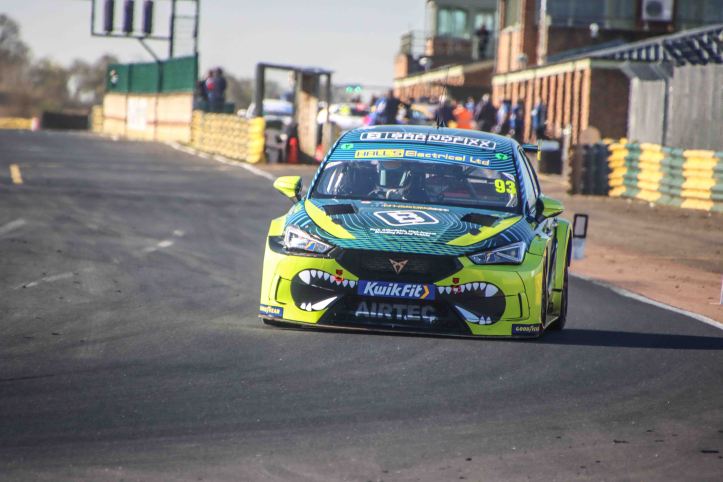
For 2025 the BTCC has three rookie drivers, but only one of them – Max Hall – would fall into that ‘young’ category of 17-21, as the 18-year-old steps up from the JCW Mini championship to race a Cupra Leon at Un-Limited Motorsport. He isn’t the only driver in that age category hitting the track this year. Daryl DeLeon, still only 19, has taken huge strides in his season-and-a-half of BTCC since entering aged 17, and will race for the prestigious WSR squad. Dexter Patterson joins Hall in the Cupra ranks. The 21-year-old returns to the BTCC after a year out, but with two seasons of experience having started his championship adventure at 18. But what are the chances that these younger drivers will be able to mirror their F1 teenage compatriots in getting some early table topping success?
We often see talent arrive in the BTCC with promise, but the physical grind of Touring Car racing often seems to dull the speed. It’s one thing to be intimidated by Max Verstappen around a Grand Prix circuit as a relatively inexperienced F1 racer, with the four-time world champion finding gaps – even in practice – to put on display his superiority. In a way a racer can ignore that and get on with their own thing in this championship. It’s very different with a monstering Ash Sutton, Josh Cook or Gordon Shedden physically barging your machine out of the way. A resilience to being battered around must be quickly developed. How have, and how will, they measure up to that aspect of racing this year, and is there a possibility that any of the trio can go on to not just win a race, but win a title in the next four or five years?
Right now DeLeon is the obvious choice to get there first. He steps into a team with all the tools on and off the track. He is in a squad who is defending the driver and manufacturer crowns. What he has at his disposal with the BMW 330 is a ready-made race winner. DeLeon snuck into the championship quietly from the perception of the public. Hopping into a Team HARD Cupra at the mid-point of 2023, there was no external pressure to perform. A 17-year-old in a back of the grid car, it was almost a non-story, but in the paddock to those who keep an eye on what is coming, there was a lot of chatter about his ability to perform. A Britcar round in an ex-Jake Hill BTCC race winning Audi S3 really got tongues wagging. The pace in a car that allegedly had mismatched shock absorbers due to budget constraints caught even the team by surprise, with a driver coach with much Touring Car success in the bag describing him as ‘the real fucking deal – a future BTCC champion if he doesn’t go GT Racing.’

That first half-season was under the radar. Three innocuous rounds, at the level that car, team and driver were expected to perform at were followed by a couple of points at Silverstone, and a 12th at Brands Hatch. That was the first outward sliver of a display of what ability is there. Last year was on another level however.
There will always be the argument that for DeLeon, Scott Sumpton and Chris Smiley in the three Cupra machines that a 20-car field was always going to hide the lack of performance of the cars in 2024. General BTCC style attrition would leave open plenty of points scoring opportunities at the back end of the grid while damaged or recovering cars were running out of position, but DeLeon time and again found himself holding his own among faster traffic, and it wasn’t just with the pace. That physicality that drivers need to adapt to was handled easily. Give and take. It’s easy to look at Un-Limited and ruminate over the uneasy and late start to the season – with immediate pace and points, but going deeper into the season, battling the PMR Vauxhall pairing on merit, showing no knee bending fealty to out of position front runners, and bringing home war wounds on his #18 Duckhams machine from going on the offensive rather than being a punching bag, put on display that the BTCC education was being put into service quickly. Ending the season aged 19 DeLeon was far from the finished article, but he’d mastered the basics.
Heading into 2025 there is a difference. And that is being in a rear-wheel-drive car. Many observers will point out that the gap between front and rear motivated machines is non-existent now. The interesting thing about DeLeon – despite that Britcar NGTC run and his Cupra Leon experience – is that RWD is regarded as being more to his forte. Racing Radicals and a Porsche Cup GT3 machine was more to his natural style – as is the case for most drivers stepping from karts to cars. That his positive professional racing career has kicked off in front-wheel-drive only adds to the expectations for this term. He should be more at home in the BMW 330 than the Cupra. In pre-season testing he has been naturally behind Jake Hill thus far and looks like in the pecking order he will fight to be the number two in the team.
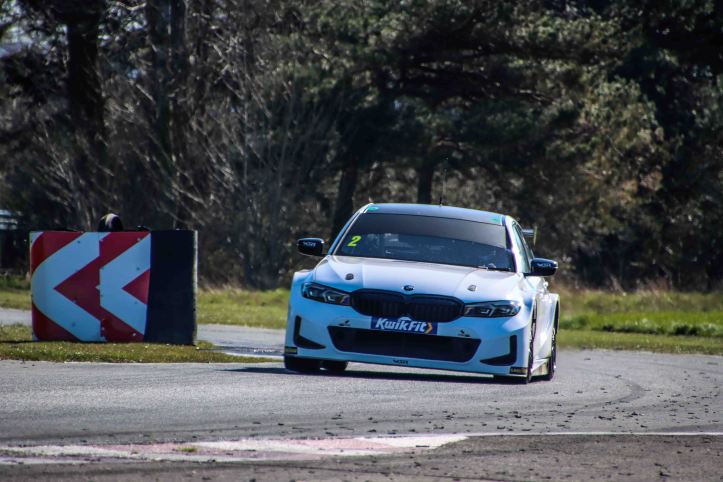
DeLeon appears to be very balanced out of the car in the BTCC paddock – and a sponge when it comes to taking on data. He has the psychology that is needed it seems, but 2025 will test that. While the LKQ machines of new teammates Aiden Moffat and Charles Rainford have been paired together, DeLeon will have to look across at Jake Hill getting into his machine in the garage before every session and race. While that doesn’t mean he’ll be in a hostile environment – the shift from the multi-car mid to back grid HARD of 2023 and the solo adventure of last season – to sharing a transporter with the reigning champion, and a driver of the level of Hill will be an interesting thing to observe. Will there be personal distance, or will it be an education? Hill himself came into WSR and butted heads with the furniture when battling with Colin Turkington in their first outing together, but the 31-year-old has admitted to taking in a lot from his former teammate. If there is a similar opportunity then DeLeon has to take it all onboard, but from now on, being on track in the BTCC is going to be very different. What he does this season will create a foundation for success in the next couple of years.
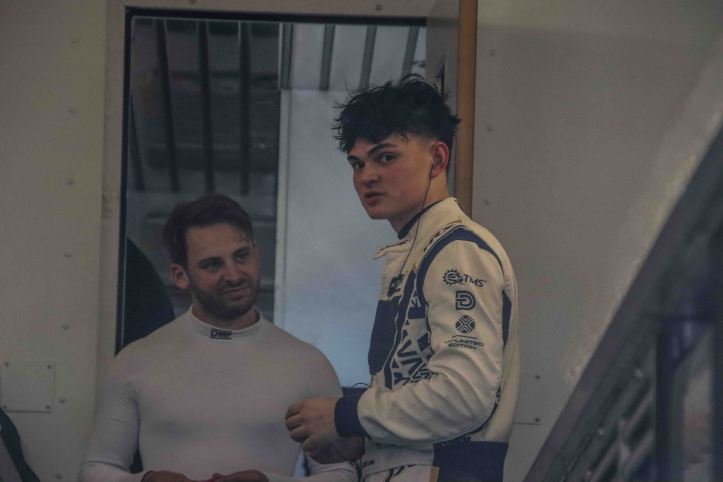
As noted earlier, facing off against the opposition in resilient fashion when fighting for tenth place is one thing, but when you’re in a car that is easily a top 10 prospect, and is a proven race winner it is another. Those skills developed at the back, then the middle of the field over the last 18 months of competing won’t be enough on their own. There is a genuine extra step to take, which is where his growth curve will be determined. If he can’t hack that then he will become just another talented prospect, if he measures up to the utter speed and somatic bombast of the very best, then 2025 will lay the groundwork for a chance to bag a championship in the next couple of seasons.
The return of Dexter Patterson is a chance for the Scottish racer to lift himself away from that tag that DeLeon is also trying to avoid. Had he not returned to reignite a BTCC career he could have been done after two years of tin top competition – labelled as talented, but not quite up to scratch. After a season in GT4 racing the chance to reset and start again is a welcome one, and this time in far better circumstances than his previous dip into the BTCC.
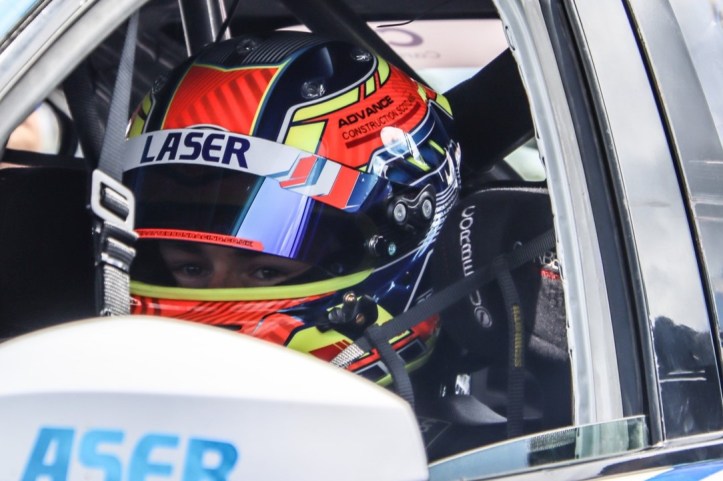
Patterson was a young driver with F1 aspirations before his Touring Car move. Being a part of the Sauber development programme (which wasn’t quite as fair and financially supportive as many other F1 development schemes) did not serve his interests in the way that it should have. After some F4 and F3/GB3 level of racing his career crossroads led him to the BTCC at 18. At first it seemed to be a cushty number, he stepped into the championship winning car from the previous two seasons. Not the type of car, but the actual car that Ash Sutton had raced to the 2020 and 2021 BTCC titles. That was a pressure inducing situation, and the immediate focus for many was where he would be in relation to the perfect marker for his talent – Aiden Moffat – coming off the back of his best season in the category.
Across two seasons in an Infiniti beside Sutton, Moffat had won a race and had scored podiums. Using the gap between that pair would surely mean that Patterson could also be measured to the top driver in the series at the time, in a hodge podge way. Wouldn’t it? Well, no. Not at all. The perfect storm hit for 2022. First off, the car didn’t really benefit from a great deal of development. While the likes of NAPA, WSR and Excelr8 made huge forward strides the Infiniti, heading towards the end of its shelf life, wasn’t quite getting the same treatment, and in addition the new for 2022 hybrid system seemed to choose the car as the machine it would like to be as uncooperative as possible with. The team dropped down the order. Sutton would not have won a third title with that car in that season had he remained, so to expect a young driver on his debut to match that would be a bit too much.
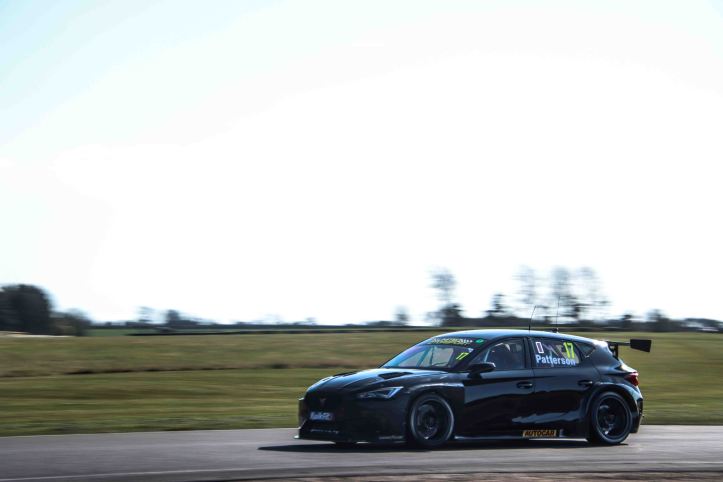
A second term saw Patterson move to Team HARD, and score points in half of the races, including managing to put the recalcitrant Cupra Leon up to an astounding sixth at Knockhill. Not only was there consistency in points scoring, but there was also a greater consistency in performance too. The Cupra is far, far from being a championship challenger, but even on his return to the BTCC in pre-season, he has looked far more rounded and balanced on track. He hasn’t set headline times, but there is most certainly a new confidence and maturity – possibly as a result of being young enough to take stock elsewhere for a season and having the resilience to come back and add his experiences together to create a higher level of performance.
Patterson has lurked just behind Max Hall in pre-season testing, doing his thing and setting impressive times. The noise surrounding his teammate has meant that he is not quite subject to the hype, or in the public view the same level of expectations, but, Patterson has also put that Cupra in places that going by the 2024 pecking order, it shouldn’t be. It tempers expectation in terms of speed, but Patterson has two years of BTCC door banging and is a few steps down the line in the most important aspect of racing in this series – and that is his racecraft. Here there will be direct comparisons to 2023 due to being in a Cupra again, but he will race the ex-Restart car of Chris Smiley which is far more developed than the Cupra was in 2023. While nobody is expecting podiums to suddenly become a regular prospect, it is the chance to re-lay foundations and course correct a career that could have headed in a negative direction, the start of the season will be a zeroing of his career, but Patterson has not just experience, but time also on his side in his quest to move to the front of the grid in the next few years.

Those headlines that were not written by Patterson were stamped to the front of websites by Hall. His fastest time on the Tuesday of the Croft test had the rest of the paddock screaming “HE’S USING TURBO BOOST.” One Nigel Ernest Mansell, when pushed on the dominance of his Williams F1 machine three decades ago, pointed out that if a car is faster than the others – for whatever reason – it means that the driver has to drive faster, and with a number of cars belting the pole time from last season down the road, Hall proved he has the pace, given a car that can match it. He doubled down on that with times at the official Donington season launch/test – this was no fluke.

Standing trackside at so many corners at Croft, it was astounding to see how Hall could put the car on the edge all day. Every lap. Late on the brakes with the nose diving under braking and tyres being maxed out (no matter the compound or age.) The soft loose rear being caught on exit. No bottling it even with a wild squirm through the ultra-fast Barcroft, hammering through the slow stuff, lap after lap for two full days. No building up confidence, just driving past the green light at the end of pitlane and turning it on. Yes, it’s raw, and no, it’s not racing, but Hall has the ingredients to be the next Ash Sutton, or given the track limit abuse, the next Josh Cook!
The education level for young drivers has changed since the nineties. From the introduction of T-Cars through Ginetta, Fiestas and the JSCC, young drivers in the 14-17 age group get to experience the physical side of Saloon Car racing – not always because of the skill level in the championships. But what Hall has displayed in Junior Saloons, and in Mini racing last year – where he took six victories – shows he is already well versed in what it takes, and he certainly comes across as a driver who will not be phased when the rear of his car goes light because there is a nose lifting him up. Again, the ability and skillset is there, but not the knowledge base. It will come though.
Hall is a mixture of intense enthusiasm and horizontal relaxation combined. There will be moments once the gloves are off where he’ll be clattered a lot more viciously – and skilfully – than he’s faced in the past, and he has the capacity to learn and return that in spades, but it will be that side of the life of a BTCC driver that will really determine how his future develops, because right now we can see he has all the other parts of the kit, we just need to see how he plays between the green light extinguishing and the chequered falling on a Sunday to fill that gap, and once he’s showing on a regular basis that he can brush off a belting – because they will come – then we’ll see how far away from the finished article he is, and once he ties that up you will not be able to discount him.
The overriding factor that for the moment will prevent the trio from grabbing a title in the next four to five years – going by common consensus – is the trio who have taken the titles so far this decade. Jake Hill, Ash Sutton and Tom Ingram were born within six months of one another. The 31-year-olds are all at their peak. They are de facto team leaders in the top three cars and teams in the championship. To dethrone them across the rest of the decade seems unlikely, but there is a precedence that points to it happening. At the head of this article Andrew Jordan (2013) and Ash Sutton (2017) – in cars or teams that were not fancied – managed to tip the apple cart.
There are returnees on the older side in the BTCC this season, but it’s very hard to imagine any of them getting the better of the current top three in the championship. They are fully developed, and have tricks up their sleeves because of that, but a betting man may not back those drivers over the three youngest in the series as being one to break the stranglehold on the title. Five years from now, if these drivers remain in the BTCC – when they’ll be reaching their peak – you will not be able to argue against the trio.
Since the start of the NGTC era the average age of a BTCC champion has been 31 (the odds on that remaining static this year are almost 100%) and in the same period the average age of an F1 champion has been 28. The average age for a first BTCC crown for drivers in that time has been 29, but for F1 racers it’s 25. By those stats Hall has 11 years, DeLeon 10 and Patterson eight seasons to beat the average, it’s impossible to think that they’ll take that long.
 Touring Car Magazine