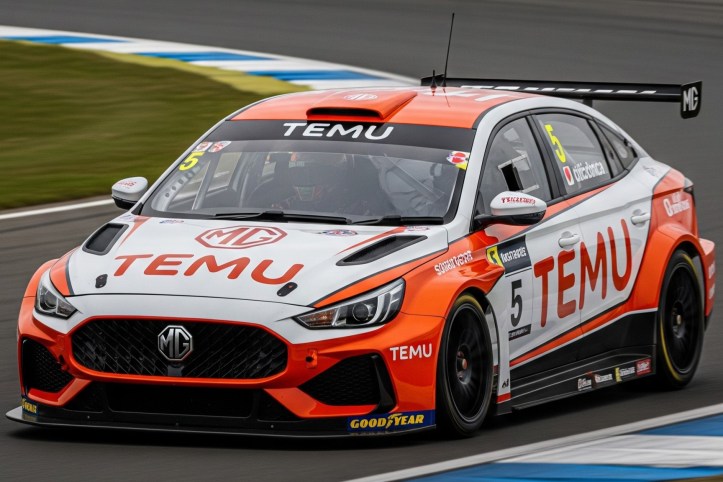
A Nissan Altima? A Honda Accord? What about an MG 5? A Ford Focus perhaps?
Are these machines realistic propositions for an international influx of new Touring Cars from around the globe?
Could we see these non-UK cars racing and bringing a refreshed look for Tin Top racing in the country over the next half-decade or so?
Yes, oddly, there’s a possibility that the current Alliance Racing/NAPA Ford Focus could be included in that list of ‘foreigners’ that have been given the opportunity to race at the highest level of British Motor Racing beginning a little under two years from now. Let us explain…..
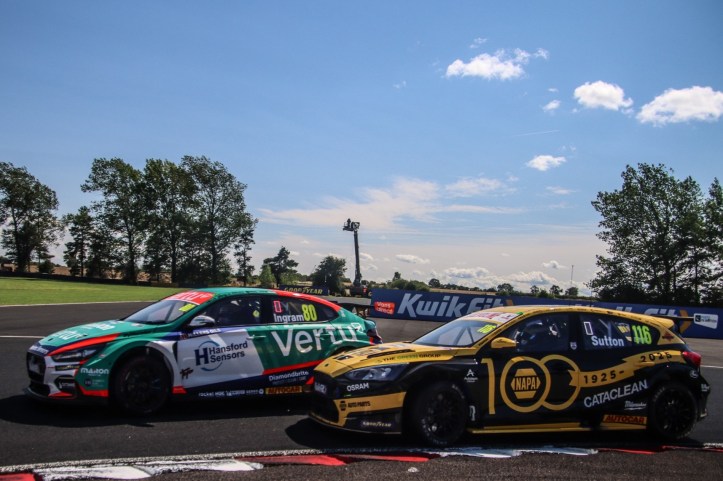
The 2027 British Touring Car Championship rules are set to extend the life of the current Next Generation Touring Cars that compete in the series. That move was a primary aim for the BTCC when last month they revealed the skeleton of the new regulations that will govern the series from 2027-2031. The current basis from TOCA (who last month were confirmed to continue to run the series till the end of 2031) competition had to be carried over. The simple fact is, as things stand, is that a revolutionary set of regulations in the current economic climate would sink the championship.
Think BTC-T in the post-Super Touring years all over again.
While not billed as an extension of the NGTC ruleset, the details released so far suggest that all current cars will remain valid until the end of the 2031 season – if the ‘Five-Year’ rule currently in place is carried over into the next period of regulations for international cars.
The directive was brought into the series to allow entrants to get the best value when investing in car development. The edict allows for machines – under the current rules – to remain in the championship for five seasons after they are discontinued in the UK market.
As an example, the recently lost Vauxhall Astra machines, run by Power Maxed Racing, had sales end in the UK in 2021 as it was replaced by a newer model. It would have been eligible to compete until the end of the 2026 season. The FK8 Honda Civic Type R run by One Motorsport was officially scrubbed from the UK Honda sales lineup in November 2021 – meaning it too has a shelf life to the end of 2026, under the current rules, but depending on the fine detail of the new rules that could be extended by a year as the car was still available internationally in early 2022.
That ‘five-year’ extension clause could be a vital component going forward through the upcoming rule change from 2027 onwards. As it stands there has been no specific wording to confirm that this stipulation will be caried over. An FAQ from the BTCC at the beginning of August stated:
“The current cars continue within their normal homologation cycle. These regulations are an evolution, not a reset – thereby protecting teams’ existing investments in their major componentry through 2031.”
This does seem to suggest that the extension allowed to cars for that grace period following production halting will continue. That could mean that all cars lining up for the upcoming round of the BTCC at Knockhill this weekend might still be on the grid until the rules are changed or updated prior to the 2032 season.
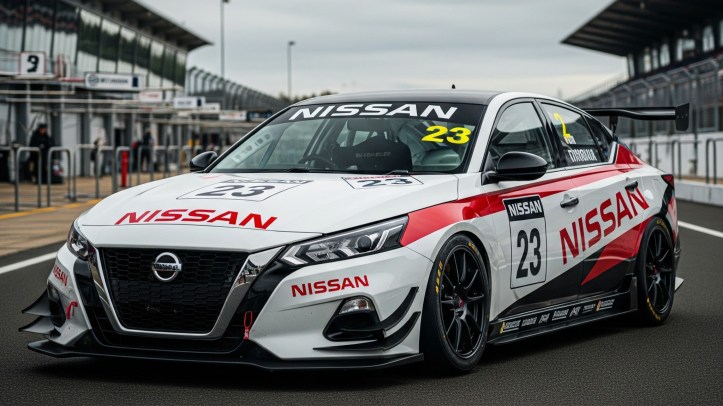
The new era of BTCC regulations allow for any car produced internationally – that conforms to the specifications – which has a parent company dealing in the UK, can be developed for the BTCC. The Nissan Altima is eligible because Nissan are active in the UK. The Lynk & Co is not, because the company are not in the UK market. Simple enough?
Another rule change is with engines – any engine will be allowed be mated (if they physically fit) to any car – so the rules will allow for the Swindon Hyundai engine to be fitted to a Cupra Leon from 2027. That is a shrewd move that should become a cost saving measure for those who develop new machines.
There haven’t been many new models brought into the BTCC of late. The Toyota Corolla and BMW 330 arrived in 2019. The current generation Ford Focus and the Hyundai i30 first raced in 2020 and the Cupra Leon arrived in 2021. The FK8 Honda Civic Type R, which is absent this weekend, landed in 2018.
Since the FK8 first appeared, it’s sibling – the FK2 Type R – is one of 12 models (including the Astra) to have exited the championship.
Replacements have been hard to come by, partially thanks to the reduction in cars to choose from which meet the requirements to enter the BTCC, and the cost of developing an NGTC car to compete with the front running cars in the championship right now. We know that Alliance Racing investigated a RWD Audi – a plan that was shot down – and have been connected to almost every manufacturer not in the series. Touring Car Magazine has had it confirmed by a team owner (not Alliance) that a design was completed for a car that could have been on the grid possibly in 2024, and certainly for 2025, but the underwriting of the project into a build didn’t quite add up – which forces the question of what does make financial sense?
If the ‘Five-Year’ rule remains then, as mentioned, all the cars on the grid for the moment will be able to continue, and this is how;
The production of the Ford Focus ends in Europe this year, with the current German built model being discontinued in November. Under the current BTCC rules that would mean that the car could be raced in the BTCC until the end of the 2030 season, but there is a caveat. The Focus is also assembled in China and Taiwan, and no announcement has been made regarding the future of the model at the three Asian plants that produce the car. With four-and-a-half months of 2025 remaining it’s reasonable to assume that production will continue into 2026 at least. While that does not help the Ford Focus as it stands right now in the BTCC, if the ‘five years after’ clause is carried over into the 2027-2031 rules, then the Focus as an ‘international’ model would theoretically be allowed to run in the series through the final season of the incoming rules.
The Focus could be a key car over the next few seasons as the series moves into the next phase of the new ‘NGTC’ era. Autosport has already confirmed the story that Alliance had planned to switch to a RWD Audi, and it is also known that the team has had plans for some time to move on from the Focus. Whether that is in time for 2026 or 2027 is not known, but what is evident is that the car will be a target for entrants once Alliance relinquishes the model. For a current team lower down the order, or for a new team, the cars are an attractive proposition. From the point of view of Alliance they could have significant financial worth if they are moved on to a squad willing to part with a decent chunk of money. With six chassis having been produced since it was introduced by Motorbase for the 2020 season, it would be rational to expect three or four cars to run deep into the new era – or indeed to the end of the 2031 regulation cycle.
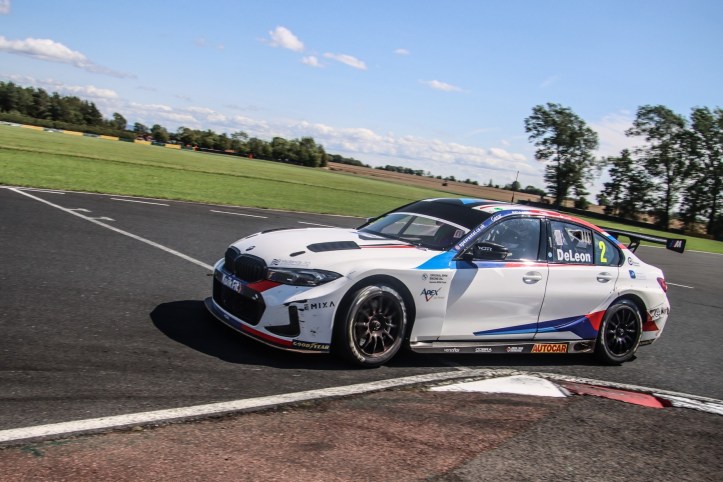
The BMW 330 is another current BTCC model that has its production obsolescence already nailed to the mast. Like the Focus, the end of its manufacturing run in Germany has already been announced, with the G20 variant being cut in late 2026. Again, like the Focus, it has international assembly with two South American and five Asian factories producing the machine. Naturally tooling will not be available for all eight plants meaning the current 330 will be produced in international markets into the first season of the new ruleset, which would make it eligible for the full cycle of the 27-31 period.
The other cars lining up on the grid at Knockhill this weekend will all be in production in 2026. The 12th generation Toyota Corolla launched in 2018 joined the grid in 2019 and will remain in production across multiple international markets beyond this year – making it eligible into 2027 – again, if the ‘five-year’ rule is retained any halt in production would allow it through the entire term.
The Hyundai i30 N – which arrived in 2016 and had a second facelift in 2024 – will remain in production in 2026 despite being a decade old. The ‘Fastback’ version currently raced in the BTCC went off sale in the UK in December 2022 before being discontinued across Europe. The shape itself in the Fastback variation would have only been eligible until the end of 2027, but it is the base car which is counted – the Hatchback and Tourer i30 remain part of the Hyundai range. It is a reason why Restart Racing opted for the machine to replace the Cupra pairing they raced last year – confirmed by Restart Racing CEO Pete Jones in the latest edition of Touring Car Magazine (available here) he describes the 2027-2031 regulations as ‘protecting our investment’ as far as the Hyundai goes.
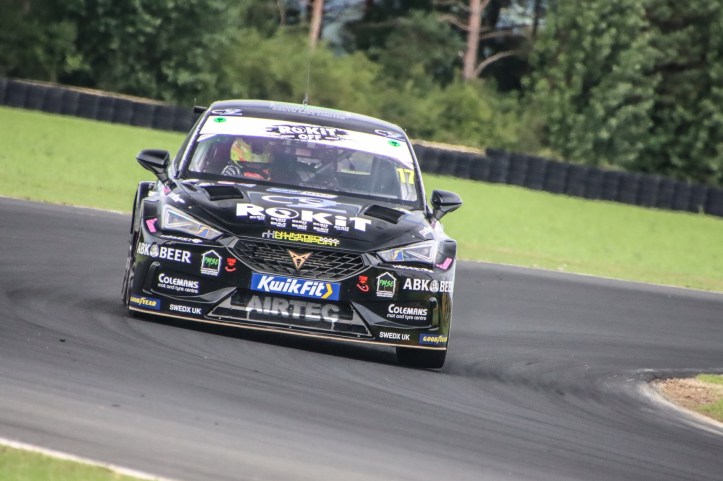
The final car on the current grid, the Cupra Leon is also continuing production into 2026. The machine – developed by Team HARD into an NGTC car – will also remain eligible until the end of 2031 – but whether it will be able to hang onto the back of the grid when newer models arrive in the next five years is an entirely separate question.
When new cars arrive in the BTCC – as they will – expect them to be early in the cycle of the new rules. With the entire grid right now looking like it will be eligible until the end of 2031 (if, yes, you’ve guessed it, the ‘five-year’ grace period continues) then the new regulations for 2032 would be the ideal time for a complete reset. There is a solid stockpile of cars right now that will be adapted for the new chapter of BTCC racing, and if there is a possibility of wholesale change for the next round of rules, then the thought of building a car for a two-year spell towards the end of the five-season rotation would likely be self-defeating financially.
As it stands each of the car models on the grid this weekend has examples that are not currently raced. A couple of examples (such as the BMW 330 that took Colin Turkington to the 2019 title) will not be made available due to their retirement into private collections. It would appear that at least 26 cars, if the criteria remains regarding post-production internationally, will be the pool to draw from before adding any new cars.
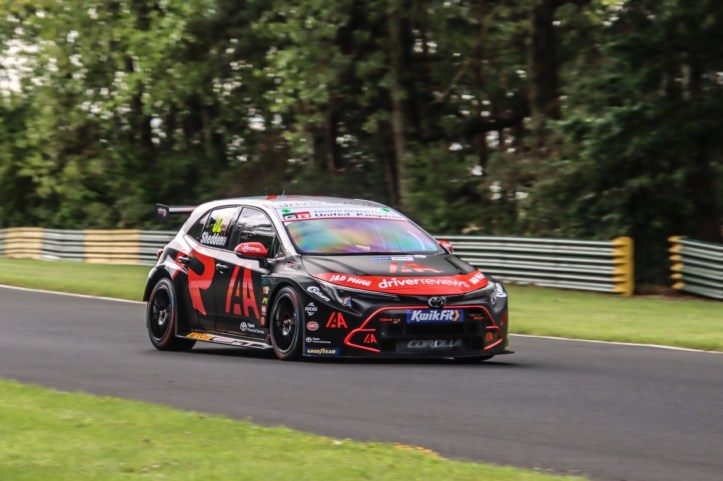
BMW 330 – four on the grid – one spare.
Cupra Leon – four on the grid – two spares as bare shells
Ford Focus – four on the grid – two other cars were built.
Hyundai i30 – six on the grid – a spare that suffered heavy damage.
Toyota Corolla – All four on the grid.
The car market is shifting and will continue to move even further away from cars traditionally suitable for Touring Car racing. SUV, Hybrid and Electric (along with the proposed ban on ICE sales from 2030) is skewing the market. This means that the current types of vehicle raced will be even further from available new machines when that juncture arrives – and it will be the responsibility of TOCA to usher in even newer rules in good time prior to the next set reaching their conclusion.
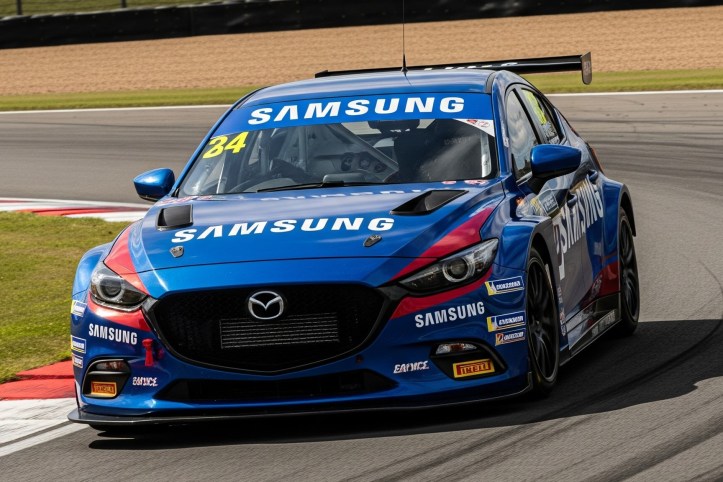
Economic challenges that are prescient nationally, inside and outside of the automotive industry, mean that the incoming rules were never going to see a complete overhaul. There are domestic market cars, such as the Mazda 3, latest generation Astra and Skoda Octavia, that are eligible to be brought into the series under current and future rules, but will teams now look to the physical properties of cars from around the world, and costs, to determine which cars could deliver, for example, an aero advantage?
Does this all mean the idea of the manufacturer entry dead? Would a major producer of cars enter a series where its own engine could be successfully used against it by a rival? Are we moving into an era where manufacturer names will be removed from engines, and all powerplants will be referred to by their builders? Will Mountune and Swindon become the official title of Ford and Hyundai engines with the big names binned? It would seem logical – having a Toyota-BMW on the grid would not work.
In the cases of Alliance, West Surrey Racing, Excelr8 and Speedworks, who have all worked closely with engine developers, a cost saving measure (and one allowing a significant carry over of knowledge base) from 2027 onwards would be to keep their current motor when developing a new chassis, meaning only one of two major elements need to be developed at a time.
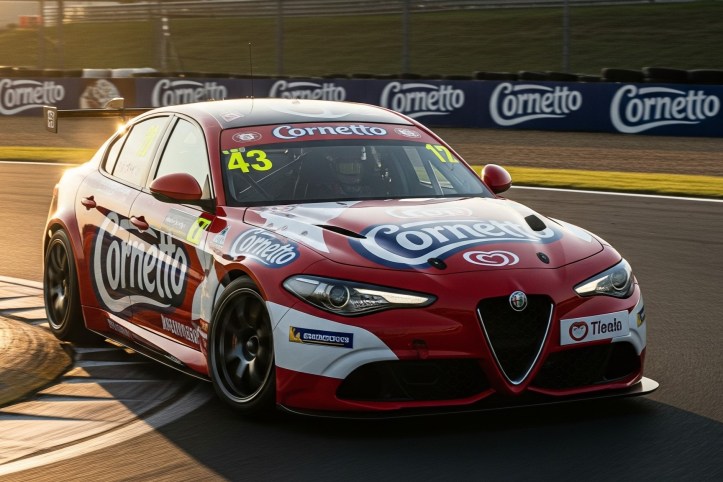
For the moment it appears that BTCC 2027 will not look too much different to BTCC 2025, but BTCC 2031 should look different. The new rules will allow for cars like the Genesis G70 and Alfa Romeo Giulia to arrive in the championship, with the engines that are powering the Ford and Hyundai machines that are battling it out for the championship this season. In a paddock where many team members refer to the BTCC as being an ‘engine series’ could the 2027 rules flip this back to being all about the chassis, or will new engines up the power and driveability game even further?
One thing that is for certain. The NGTC rules that came into place in 2011 have already gone through evolutions. From the GPRM to RML machines and into and out of hybrid. In this time the grid has closed up, and the regulations have continued to deliver a type of racing that ticks the boxes of the championship, the teams and a great deal of the fans – why change a winning on-track formula when the one you have is ticking along nicely?
 Touring Car Magazine